Dental Implant: A Long-Lasting Solution to Missing Teeth
Losing a tooth - whether from decay, injury, or gum disease - affects far more than your smile. It changes the way you chew, the way you speak, and quietly, the way you feel about yourself. For many people, the search for a permanent solution eventually leads to dental implants. Unlike removable dentures or bridges that rely on neighbouring teeth, an implant works from the root up, mimicking the structure of a natural tooth. If you are currently weighing your options, this article walks you through what implants actually involve, who stands to benefit, and what honest considerations should shape your decision.
What Is a Dental Implant, Exactly?
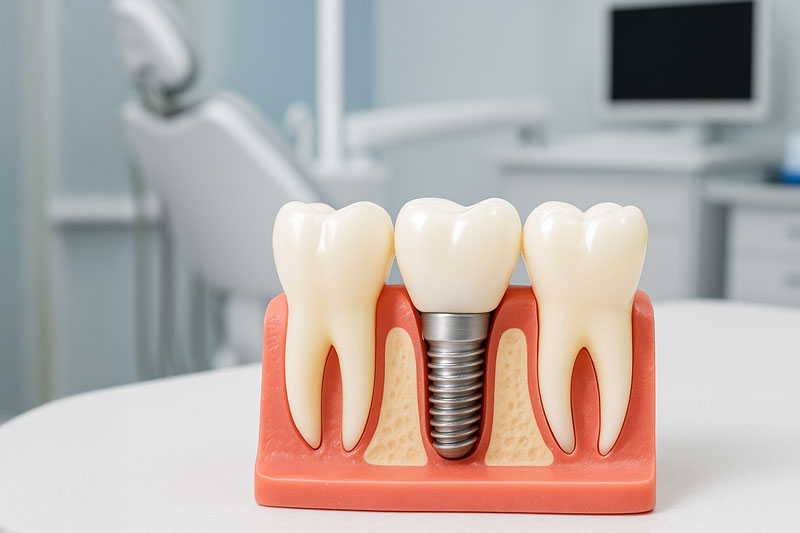
A dental implant is a small titanium post that a dentist surgically places into the jawbone, where it gradually fuses with the bone through a process called osseointegration. Once the implant has integrated - typically over two to four months - a connector piece called an abutment is attached, and finally a custom-made crown is placed on top. The result is a tooth replacement that looks, feels, and functions almost identically to a natural tooth.
The Three Components
Understanding the three-part structure helps set realistic expectations. The implant post provides the foundation and stimulates the jawbone just as a tooth root would. The abutment connects the post to the visible portion. The crown is the part you see - shaped and shaded to match your surrounding teeth. Each component plays a distinct role, and the quality of all three influences the long-term outcome.
How It Differs from a Bridge or Denture
A dental bridge is anchored to adjacent teeth, which must be filed down to support it - permanently altering healthy teeth. Dentures rest on the gum surface and can shift during eating or speaking. An implant, by contrast, is self-supporting and does not compromise neighbouring teeth. It also preserves the jawbone, whereas bone loss continues quietly beneath a bridge or under a denture over time.
Who Is a Good Candidate?
Implants are suitable for a wide range of patients, but they are not universally appropriate. A thorough evaluation by a dentist or oral surgeon is always the first step.
Favourable Conditions
Adults with one or more missing teeth, adequate bone density in the jaw, and healthy gums are generally good candidates. Non-smokers or those willing to quit before treatment tend to have better healing outcomes. Age is less of a barrier than many assume - implants are placed in patients well into their seventies and beyond, provided overall health supports the procedure.
When Implants May Need More Planning
Patients with diabetes, osteoporosis, or a history of radiation therapy to the jaw may still receive implants, but require more careful pre-treatment planning. Insufficient bone volume does not automatically rule out the procedure either - bone grafting can rebuild the foundation before implant placement. A detailed X-ray or CBCT scan gives the dentist a precise picture of what is available to work with.
The Treatment Process: What to Expect
Implant treatment is not a single-appointment procedure. It unfolds in stages, which is one reason it requires commitment from the patient.
The initial consultation includes an examination, imaging, and a discussion of your medical history. If bone grafting is needed, that is completed first and requires its own healing period. The implant placement itself is performed under local anaesthesia and is generally well-tolerated. The osseointegration period follows - this is simply waiting for the titanium to fuse with the bone, during which a temporary restoration may be placed. Once healed, the abutment and final crown are fitted.
Total treatment time ranges from three months (in straightforward cases) to over a year when grafting or complex conditions are involved. Patients who explore affordable dental implant solutions early in their planning find it helpful to ask specifically about the likely timeline for their situation, as this affects practical decisions around work, diet, and follow-up appointments.
Benefits That Matter in Daily Life
The clinical advantages of implants are well-documented, but it is the everyday impact that tends to resonate most with patients after treatment.
Function That Feels Natural
Implants restore close to full chewing efficiency. Patients can eat fibrous vegetables, hard fruits, and most foods they had been avoiding with a denture or after tooth loss. Speech, which is often subtly affected by missing teeth, typically returns to normal once the implant is in place.
Longevity and Bone Health
With proper oral hygiene and regular dental visits, implants can last fifteen to twenty-five years or more - some patients retain them for life. Equally important is their role in preventing bone resorption. When a tooth root is absent, the jaw gradually loses density in that area. An implant stops this process, maintaining facial structure over time.
Aesthetic and Psychological Confidence
A well-made crown is virtually indistinguishable from the surrounding teeth. For patients who had been masking their smile or avoiding social situations due to a visible gap, this change tends to have a meaningful psychological dimension beyond the purely physical.
Weighing the Costs and Considerations
Implants carry a higher upfront cost than bridges or dentures, and this is often the most significant factor in a patient's decision. It is worth understanding what that cost reflects: the surgical expertise, the quality of materials, laboratory fabrication, and the multi-stage care involved. When calculated over a decade or two - accounting for the maintenance and replacement costs that often accompany dentures and bridges - implants frequently represent comparable or better value.
For patients replacing multiple or all teeth, full mouth dental implants using protocols such as All-on-4 or All-on-6 can restore an entire arch on as few as four to six implants, making comprehensive treatment more accessible than many expect.
Insurance coverage for implants varies. Some plans cover a portion of the crown or the surgical fee; others do not cover implants at all. It is worth clarifying your coverage before treatment, and asking your dental provider whether an EMI or phased payment structure is available.
Frequently Asked Questions
Is the implant placement procedure painful?
The procedure is carried out under local anaesthesia, so discomfort during placement is minimal for most patients. Post-operative soreness is common for a few days and is managed with prescribed pain relief. Many patients find the experience less uncomfortable than they had anticipated.
How long does an implant last?
The titanium post can last a lifetime with good oral hygiene and routine dental care. The crown on top may need replacement after fifteen to twenty-five years due to normal wear, though this varies by individual habits and bite forces.
Can implants be done if I have bone loss in my jaw?
In many cases, yes. Bone grafting procedures can rebuild adequate volume before implant placement. The extent of bone loss and your overall health determine whether grafting is necessary, and a CBCT scan gives the dentist the detail needed to plan accordingly.
Are dental implants suitable for older adults?
Age alone is not a disqualifying factor. Implants are placed successfully in patients in their sixties, seventies, and beyond. The more relevant considerations are bone density, general health, and any medications that might affect healing - all of which your dentist will assess during the consultation.
How do I find a reliable implant provider?
Look for a provider with documented experience in implant placement, access to proper imaging equipment, and a transparent treatment plan with itemised costs. Reading patient reviews, asking about post-operative care protocols, and consulting more than one clinic before deciding are all sensible steps.
SmyleXL Leading Dental Care is one example of a clinic where patients can consult and review their specific case before committing to treatment.
Making an Informed Decision
Dental implants are not the right choice for every patient in every circumstance, but for those who are suitable candidates, they offer a level of function, aesthetics, and durability that other options currently do not match. The decision deserves time, a proper clinical evaluation, and honest conversations about cost, timeline, and expectations. If you have been living with a gap in your smile or finding dentures increasingly inconvenient, an implant consultation is a reasonable next step - not a commitment, simply a clearer picture of what is possible for your specific situation.
Source: Dental Implant: A Long-Lasting Solution to Missing Teeth


Comments
Post a Comment